Building a Family Office Around Long-Term Ownership
A family office built for long-term ownership measures itself in decades, not quarters, and organizes everything else around that choice.
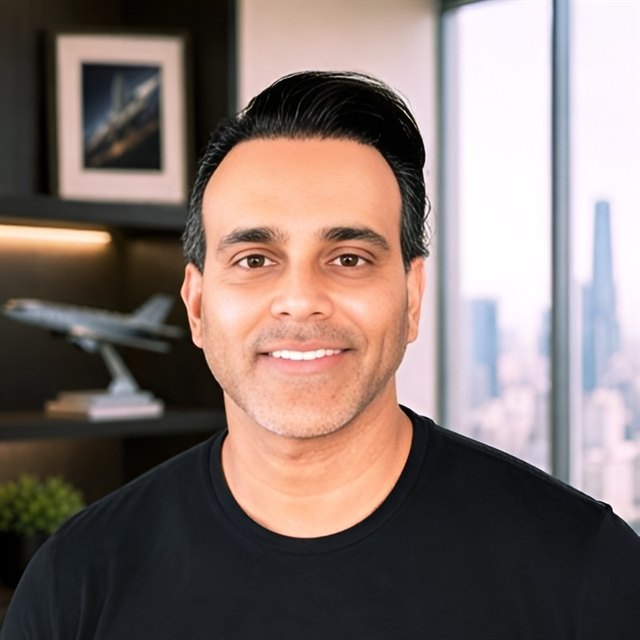
A family office built around long-term ownership is one that buys and keeps good assets for decades, rather than trading them for short-term returns. That single choice shapes almost everything else: what the office owns, who it hires, how it measures success and how it prepares the next generation. When I founded Impero Capital Holdings as a single-family office, it was the first decision we made, and the one every later decision is tested against.
Start with a written purpose
Before any investment, a family office needs a short written statement of what the capital is for. Security for the family, independence for the next generation, support for causes the family cares about: the specific answers matter less than having them on paper. In medicine, a treatment plan begins with the goal of care. Without one, every new option looks equally attractive. The same is true of capital. A clear purpose makes it much easier to say no.
Patient capital is a real advantage
Most institutional money works on a clock. Funds have terms, managers have annual reviews and public companies report every quarter. A family office answers to the family alone, so it can hold an asset through a cycle, wait for a fair price and leave a well-run business alone to compound. That patience is one of the few genuine advantages a family office has over larger investors. It is also easy to waste, by reacting to every headline or reshuffling the portfolio whenever markets move.
Own things you understand
Long-term ownership works best with assets the family can understand and, ideally, help improve: operating businesses, real estate and private companies in fields where the family has real knowledge. For me those fields are healthcare and the businesses around it, and more recently aerospace and technology. I would rather own a smaller number of things I can follow closely than a long list I cannot. A physician would not manage a patient from a summary sheet alone, and an owner should not manage a business that way either.
Measure in decades
If the horizon is long, the scorecard has to be long too. Annual returns still matter, but the more useful questions are slower ones. Is each business stronger than it was three years ago? Is the family's exposure to any single risk shrinking or growing? Are the people running things the people we would choose again? I wrote about the probabilities behind those judgments in Calculated Risk: A Cardiologist's Framework for Big Decisions.
Governance before it is needed
Families rarely struggle over a good year. They struggle over transitions: a death, a sale, a disagreement between siblings. Long-term ownership needs simple governance put in place early, while everyone is getting along: who decides, how decisions are recorded, what happens when someone wants to leave. Good advisers, sound legal structures and regular family meetings are not glamorous, but they are what lets an asset outlast the person who acquired it.
Teach the next generation to own, not just inherit
Ownership is a skill. Children who grow up seeing how decisions are made, why some opportunities are declined and how a business is cared for are far better prepared than those who simply receive assets later. I wrote more about this in Raising Children Who Understand Ownership. The family office is, in a sense, the classroom.
The discipline underneath
None of this is complicated. It is simply hard to keep doing for twenty or thirty years. The habits that sustain it are the same ones that sustain good medical practice: a clear goal, honest records, steady follow-up and the humility to ask for a second opinion. A family office that keeps those habits gives its capital the best chance of serving the family long after the founder has stepped back.
This article is general information about how one family office thinks, not investment, legal or tax advice. Every family's situation is different.
About the author. Irfan Siddiqui is a physician, entrepreneur and investor with more than twenty-five years in medicine. He founded Impero Capital Holdings, a single-family office, and is the physician behind Regenerative Health & Wellness (concierge medicine) and Expert Medical Advisors & Consultants (independent medical review). Read his full biography.